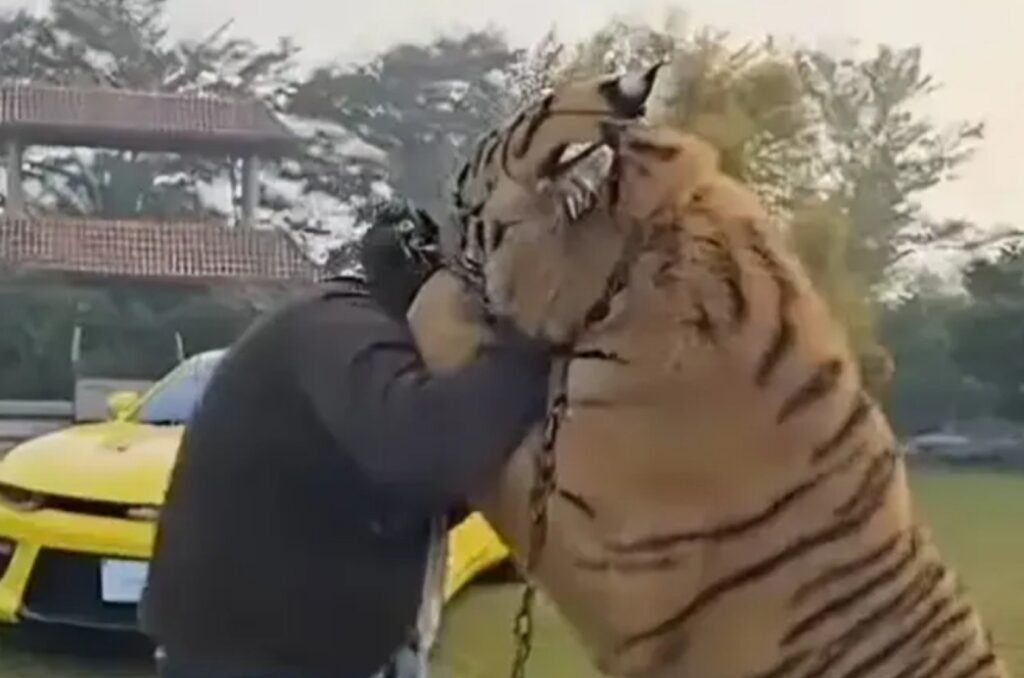
La urgencia por un viral terminó en la morgue. En una finca privada de Lahore, Pakistán, un joven de 19 años murió destrozado por una tigresa que fue liberada de su encierro con un único objetivo: servir de utilería para un video de TikTok.
Por el caso están detenidos el reconocido influencer Nouman Hassan y el dueño del establecimiento, identificado como Fayyaz. Lejos de reportar el hecho con transparencia, ambos orquestaron una coartada exprés: al llegar las autoridades, declararon que el empleado había sido atacado por un perro. La mentira se derrumbó en cuestión de horas, cuando las pericias médicas confirmaron que la magnitud de los desgarros correspondía indudablemente a un gran felino.
19-YEAR-OLD FARMHOUSE WORKER KILLED BY TIGER DURING TIKTOK VIDEO SHOOT; CREATOR AND OWNER ARRESTED
A 19-year-old farmhouse worker has died after being mauled by a tiger during a TikTok video shoot at a private wildlife-breeding facility in Lahore, Pakistan, raising serious questions about the handling of dangerous animals and the safety of workers.
The victim, identified as Talha, was attacked on Wednesday, November 11, at a farmhouse in the Kahna area of Lahore, where TikToker Nauman Hassan had reportedly arranged to film a video involving the animal.
Police said the tiger attacked Talha, leaving him critically injured. He was rushed to a private hospital, where he later died from his injuries.
Investigators also uncovered an attempt to conceal the circumstances surrounding the tragedy by initially presenting the incident as a dog attack. A police investigation subsequently established that the teenager had been attacked by a tiger.
The farmhouse owner, identified as Fayyaz, and TikToker Nauman Hassan were arrested in connection with the incident. Police said investigators were examining possible negligence, the legality of keeping the animal and the safety arrangements at the facility.
The incident has also raised concerns about the farmhouse’s wildlife breeding operations. Reports indicate that its breeding licence had expired in 2025. A separate account by Daily Pakistan stated that authorities seized 33 lions from the premises and arrested three individuals, although police reports published by Dawn confirmed two arrests and the confiscation of the tiger involved in the fatal attack.
The Punjab Wildlife Department has taken custody of the animal, while investigations into the circumstances of Talha’s death continue.
The tragedy is a stark reminder that dangerous wild animals are not props for online entertainment. No TikTok video, social media engagement or pursuit of online popularity is worth putting human lives at risk.
— AfrikTimes (@afriktimesint) November 13, 2026
La víctima, llamada Talha, trabajaba en el mantenimiento del predio. De acuerdo con la reconstrucción policial, el ataque ocurrió cuando Hassan llegó al lugar para producir contenido fresco para sus redes y pidió que sacaran a la tigresa de su jaula para sumarla a la toma. En pleno rodaje, el animal se abalanzó sobre el joven. Talha fue trasladado de urgencia a un hospital de la zona, pero la gravedad de las heridas fue irreversible y falleció mientras los médicos intentaban estabilizarlo.
Hassan no es un nombre menor en el ecosistema digital asiático. Acumula millones de seguidores monetizando videos con leones y tigres, escudado en un canal de YouTube donde afirma que su objetivo es “inspirar, educar y entretener sobre la vida silvestre”. Su historial de publicaciones, sin embargo, muestra una negligencia sistemática: se expone y expone a otros manipulando felinos de gran porte sin barreras físicas ni medidas de contención.
“La pasión por TikTok no puede ser más importante que una vida humana”, sentenció la Policía de Lahore en un duro comunicado donde cuestionó la espectacularización del riesgo.
Mientras los dos acusados enfrentan cargos por encubrimiento y negligencia fatal, la tigresa fue incautada por el Departamento de Vida Silvestre. La investigación se centra ahora en rastrear los papeles del lugar: las autoridades buscan confirmar si la finca operaba en la clandestinidad o si el dueño tenía alguna habilitación legal para alojar fauna exótica.



Comentarios